What size kite for what wind?
Most size charts give you one size per wind speed. That is half the question. A 12 metre kite in 16 knots is lovely for someone who weighs 90 kilos and far too much for someone who weighs 55. Here is the whole table, with your weight in it.
GuideThe table from 50 to 100 kilos, for twintip and surfboard5 minute read
kite sizein square metres= 2.2 × your weightin kilosthe windin knots
That is all there is to it. A small script reads this formula from the code of the wind calculator and works out the table with it. If the formula changes there, the table here changes with it.
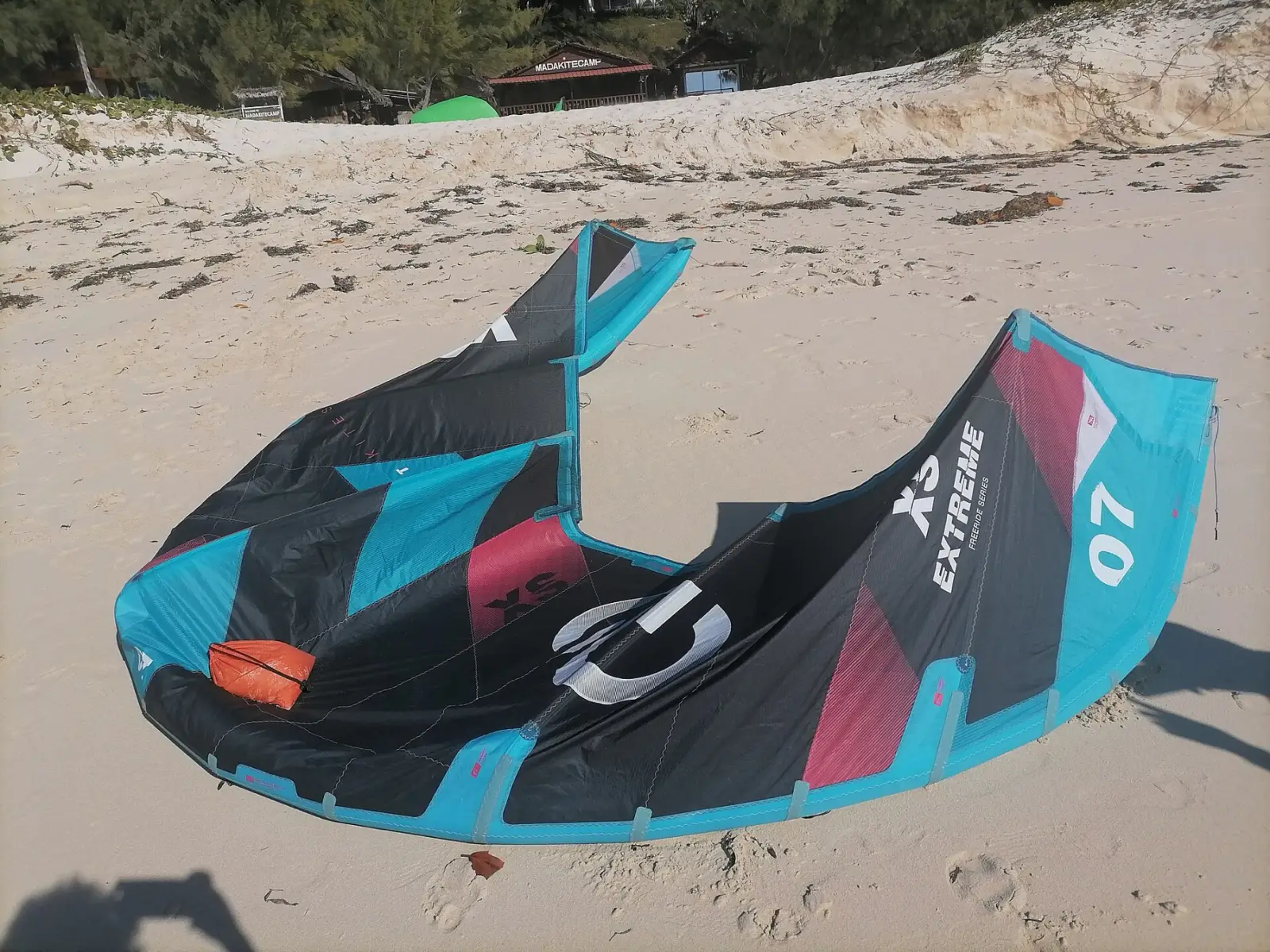
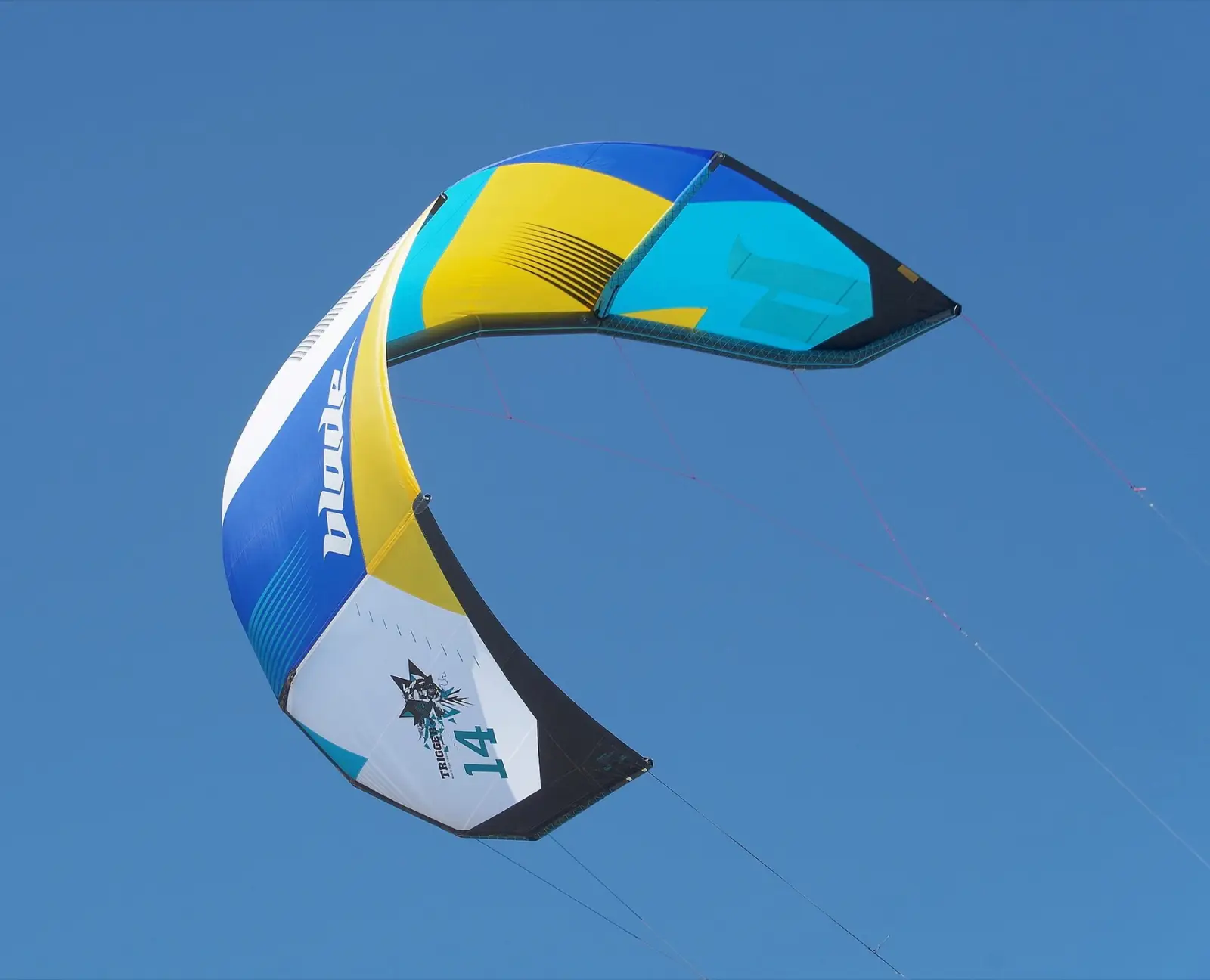
Every kite has a number on it. That is the area of the canopy in square metres, and kiters simply say "a 9" or "a 12". A bigger canopy catches more wind. So in light wind you want a big kite and in strong wind a small one. How much bigger or smaller depends on what is hanging on the lines. In other words, you.
01The table
Find your weight on the left and the wind in knots along the top. The box shows the size in metres.
Twintip: kite size in metres. Wind in knots along the top, your weight in kilos on the left.
| kg | 12 | 14 | 16 | 18 | 20 | 22 | 24 | 26 | 28 | 30 | 32 | 35 |
|---|---|---|---|---|---|---|---|---|---|---|---|---|
| 50 | 9 | 8 | 7 | 6 | 6 | 5 | 5 | 4 | 4 | 4 | 3 | 3 |
| 60 | 11 | 9 | 8 | 7 | 7 | 6 | 6 | 5 | 5 | 4 | 4 | 4 |
| 70 | 13 | 11 | 10 | 9 | 8 | 7 | 6 | 6 | 6 | 5 | 5 | 4 |
| 80 | 15 | 13 | 11 | 10 | 9 | 8 | 7 | 7 | 6 | 6 | 6 | 5 |
| 90 | 17 | 14 | 12 | 11 | 10 | 9 | 8 | 8 | 7 | 7 | 6 | 6 |
| 100 | 18 | 16 | 14 | 12 | 11 | 10 | 9 | 8 | 8 | 7 | 7 | 6 |
Directional (surfboard): the same sum, minus 1.5 m. Wind in knots along the top, your weight in kilos on the left.
| kg | 12 | 14 | 16 | 18 | 20 | 22 | 24 | 26 | 28 | 30 | 32 | 35 |
|---|---|---|---|---|---|---|---|---|---|---|---|---|
| 50 | 8 | 6 | 5 | 5 | 4 | 4 | 3 | 3 | 3 | 3 | 3 | 3 |
| 60 | 10 | 8 | 7 | 6 | 5 | 5 | 4 | 4 | 3 | 3 | 3 | 3 |
| 70 | 11 | 10 | 8 | 7 | 6 | 6 | 5 | 4 | 4 | 4 | 3 | 3 |
| 80 | 13 | 11 | 10 | 8 | 7 | 7 | 6 | 5 | 5 | 4 | 4 | 4 |
| 90 | 15 | 13 | 11 | 10 | 8 | 8 | 7 | 6 | 6 | 5 | 5 | 4 |
| 100 | 17 | 14 | 12 | 11 | 10 | 9 | 8 | 7 | 6 | 6 | 5 | 5 |
The table is a starting point. The wind calculator does the same sum with today's real wind at your spot, takes the gusts into account and tells you whether it will be a session at all.
02How to read it
Each box shows the ideal size, and that is not always a size you own. If it says 15 and your biggest kite is a 12, there is not enough wind for you. Buying a bigger kite helps, pumping harder does not.
An ideal size is a single point. In reality every kite has a whole stretch of wind in which it works. At the bottom end you have little power and have to work for it. At the top end you have too much, and the kite is flying you instead of the other way round. That is why someone who weighs 85 kilos can ride a 7 metre happily from the low 20s to the mid 30s in knots, even though the table only lists it at one wind speed.
How much wind a kite can handle
Start from the average wind and then look at the gusts. If they go above 1.6 times the average, take one size smaller. On a day like that, the peak decides whether you are still in control.
The second table is for anyone who rides a surfboard. A board like that is bigger than a twintip and floats better, so 1.5 metres comes off the size.
The sum stops at 3 metres, so in really strong wind a 3 stays in the box. Kites of 3 and 4 metres do exist, mostly for waves and storm days, but hardly anyone owns one. If you see a 3 or a 4 in your row, read it as "this is not a day for me". Above 40 knots the site says no anyway.
03Big and small kites fly differently
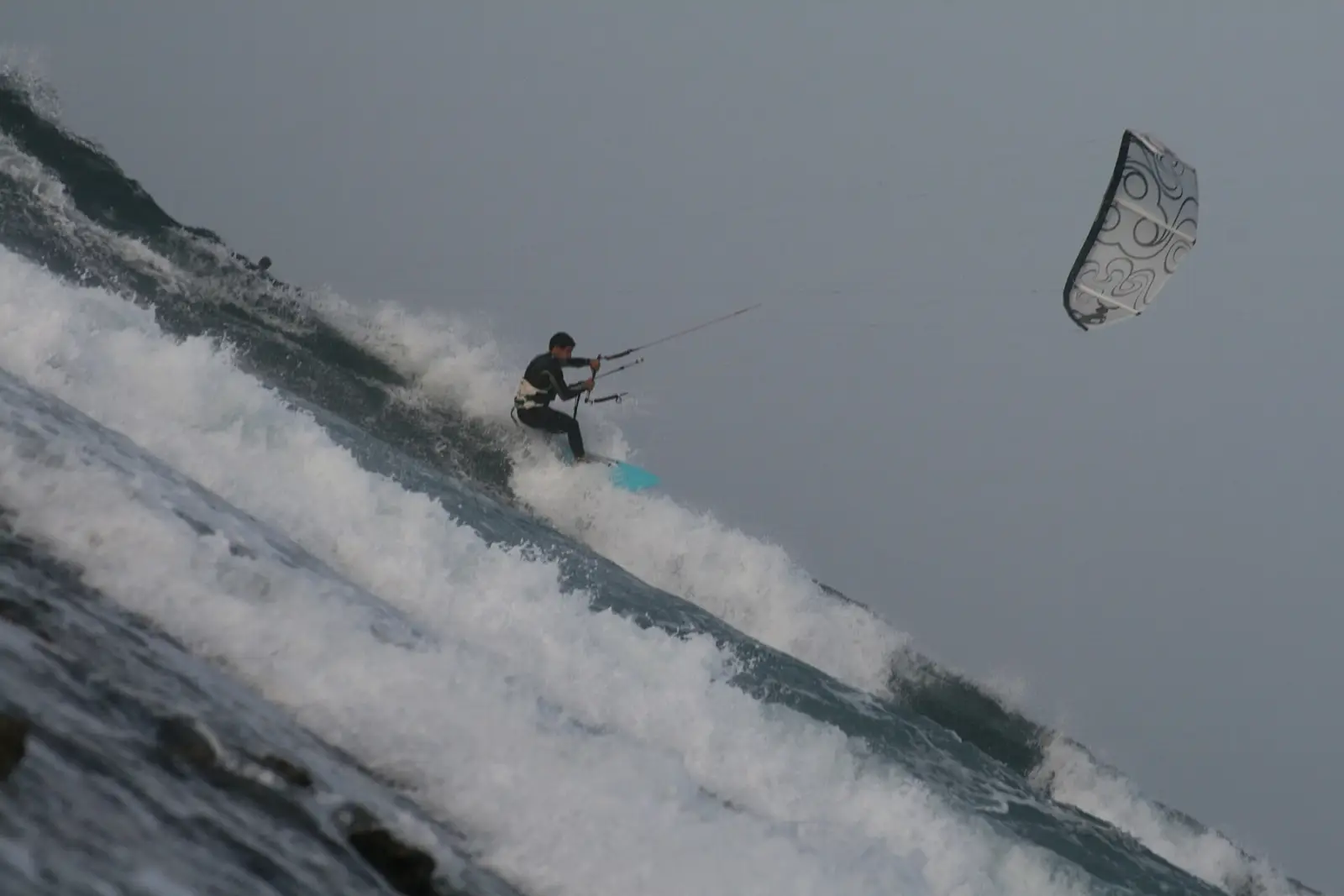
Size is about more than pull. A big kite turns slowly. You steer, and a moment later it follows. That makes it forgiving and calm, and that is why you learn on a slightly bigger size in light wind. The downside is that it also feels sluggish: a shop that sells them bluntly calls big kites "less responsive".3
A small kite does the opposite. About everything of 9 metres and smaller, the same shop writes: "These kites turn very fast."3 A small movement on the bar has a big effect straight away, and because you use them on days with lots of wind, everything happens harder as well. Exciting if you can handle it, and a reason not to rush to the strong days as a beginner.
04Your first kite
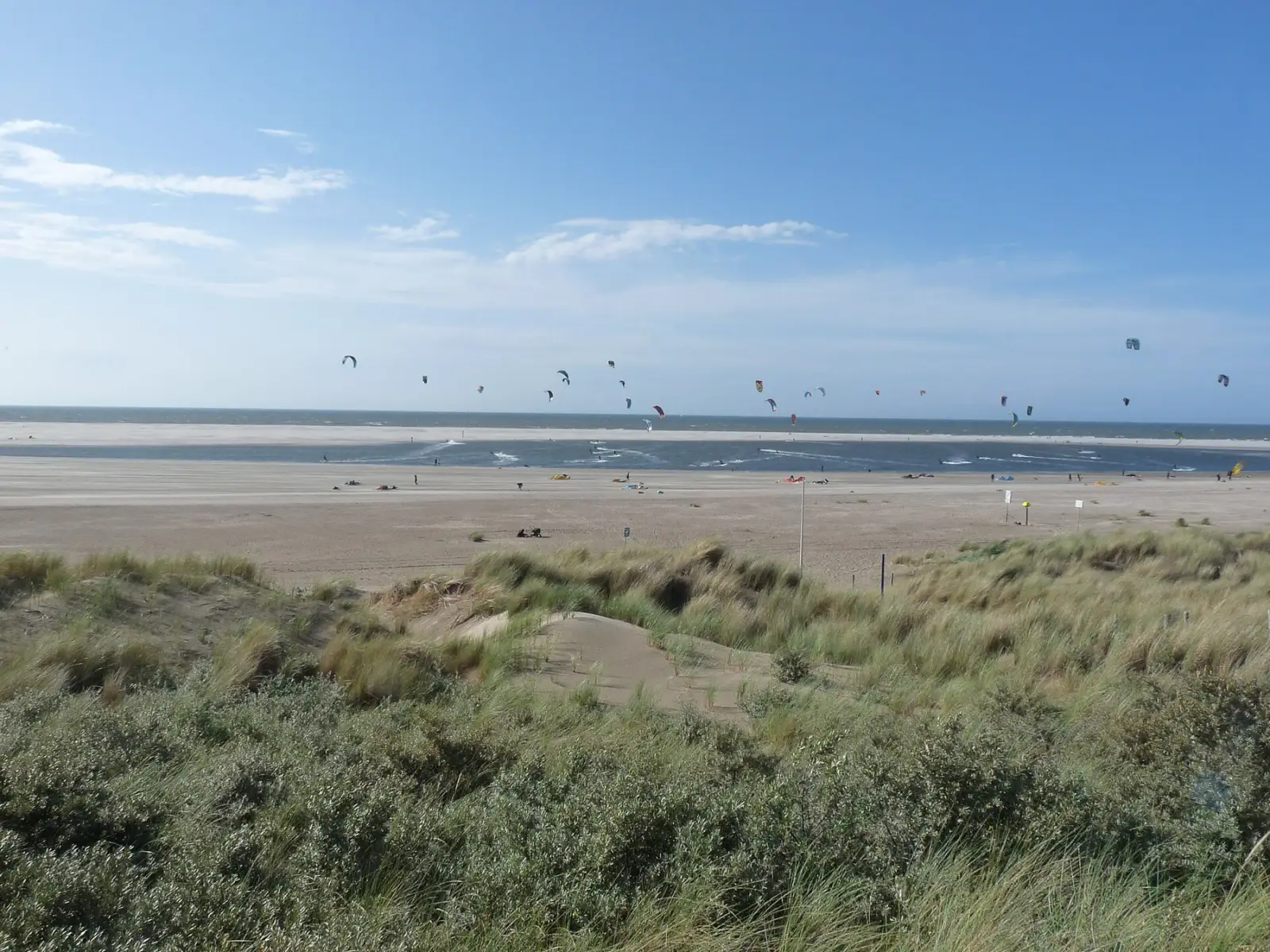
During your lessons you ride the school's kites and do not have to choose anything. The question only comes up when you buy your own, and then it is a different question than you think. You buy a kite for the wind you will be out in most often, and on the coast of the Netherlands that is 18 to 20 knots.
So look in the 18 or 20 column. For 80 kilos on a twintip you end up with a 10 or a 9. That will be the kite you pump up most often. A second, smaller kite comes later, when you want to catch the strong days too.
If you're unsure between two kite sizes: choose the smaller one, especially if you're still learning.
Two things matter more than half a metre of canopy. Buy a kite from the last few years, not one that is ten years old. And have the lines measured. Stretched lines make a good kite fly like a bad one.
05Why the brand says something different
Every kite comes with a wind range from the brand, for example 12 to 22 knots for a 12 metre. That is correct, but it answers a different question. The range tells you in what wind that kite keeps flying. Whether it feels good for you depends on your weight.
Airush states that clearly. Their advice of 9 to 12 metres in 15 to 20 knots is for someone of 70 to 85 kilos.1 Check it with the formula and you get the same answer: 80 kilos in 18 knots is a 10. If you weigh 60 or 100, you have to convert a brand chart like that yourself. That is why our table gives one size per weight, where a brand gives one range per kite.
The KNRM, the Dutch lifeboat service, puts it more briefly in its tips for kiters: "a lighter surfer needs different gear from someone who is heavier." (translated)2
06The board counts too
The table assumes a twintip, the board almost everyone starts on. The more your board carries you itself, the less kite you need.
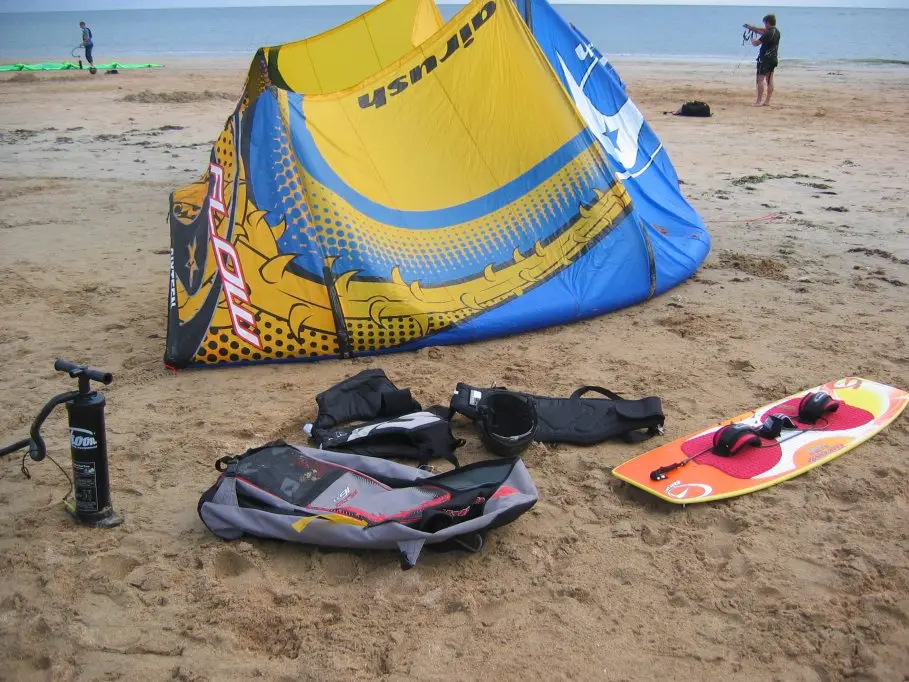
On a surfboard, 1.5 metres comes off the size here. That matches what schools go by: "one size smaller than a twintip".4
A hydrofoil goes a step further. The wing under the board lifts you out of the water, the drag almost disappears, and you ride in wind where a twintip sits still. The advice is 2 to 3 metres smaller than on a twintip.5 Kitewind takes off 2.5 metres, and on small kites never more than a quarter of the size, because otherwise there would be almost nothing left of a 6 metre. Choose foil under board on the wind calculator.
07Where the 2.2 comes from
Not from a laboratory. It is a rule of thumb that goes round among kiters, and you can find it word for word in, for example, a kite school's handbook: "Weight (kg) / wind (knots) x 2.2 = size of kite you should be using".6 The oldest trace to be found is a spreadsheet from 2011 by a kiter who converted the brand charts for someone of 75 kilos to other weights. He honestly added:
As with any effort to apply simple math to a complicated and subjective thing, it ain't perfect.
In terms of physics the shape is not quite right either. The force of the wind grows with the square of its speed, so with twice as much wind you would need a quarter of the canopy, not half. Yet all the charts from brands and schools are flatter than that. Probably because in strong wind you can shed a lot of power by pushing the bar away, although none of the sources explains it that way. The rule of thumb follows those charts, and it does so neatly:
| 80 kilos, twintip | 15 kn | 20 kn | 25 kn | 30 kn |
|---|---|---|---|---|
| Kitewind (2.2) | 12 | 9 | 7 | 6 |
| Kitestars, school | 13 | 10 | 8 | 6.5 |
| Windance, shop | 12 to 14 | 9 to 10 | 7 to 8 | 6 to 7 |
| TypeOne, Dutch | 10 to 12 | 9 to 11 | 8 to 10 | 6 to 8 |
Taken from their own charts.489 Above 20 knots Kitewind comes out half a size to a full size smaller than the rest. That is the safe side.
Two things are not in it. The first is how well you ride: "The higher the level, the higher the range the kite can be used at", and beginners go smaller when in doubt.10 The second is who you are. The source is brief about that: men and women can ride the same kite, what counts is weight and experience.10 None of the sources names muscle strength as a separate factor. It seems likely that it lets you last longer on a hard day, and that it does not change the size you need. At the edges, below 55 and above 100 kilos, any formula gets rougher.
Enter your weight and your kites. The wind calculator picks the size for each hour from what you have in the car, and tells you when none of your kites fits.
08Further reading
- How much wind do you need. The lower limit, and why it differs from person to person.
- Is kitesurfing dangerous. About offshore wind, and what really goes wrong.
- Learn to kitesurf. Where to start and who to learn from.
- Wind force to knots. The Beaufort scale in knots, km/h and m/s.
Words in this article
Sources
- Airush, "What kite size should you choose based on the wind". A brand, so it sells what it writes about. airush.com
- KNRM (the Dutch lifeboat service) and Nederlandse Kitesurf Vereniging (the Dutch kitesurfing association), "Tips voor surfers" (Tips for surfers, in Dutch). knrm.nl
- MACkite, "Big kites vs small". A shop. mackiteboarding.com
- Kitestars, a kite school, size chart and calculator. kitestars.com
- MACkite, "How will my kite work for foilboarding". mackiteboarding.com
- Peter's Kiteboarding Handbook, "Choosing the right kite size". peterskiteboarding.com
- James Douglass, "Interactive kiteboarding calculator", 2011. jimbodouglass.blogspot.com
- Windance, a shop, "Kite size chart". windance.com
- TypeOne Kiting, "Hoe kies je de juiste kitemaat" (How to choose the right kite size, in Dutch). typeonekiting.nl
- Windy.app, "How to choose the right kiteboarding kite size". windy.app